
A good few weeks ago we had 'The Meat
Lecture” at Tante Marie. I had been looking forward to it since
before the fish lecture... and with the fish lecture being so damn
entertaining, my expectations were raised somewhat for the meaty
version.
I was not disappointed.
Upon entering the demonstration room we
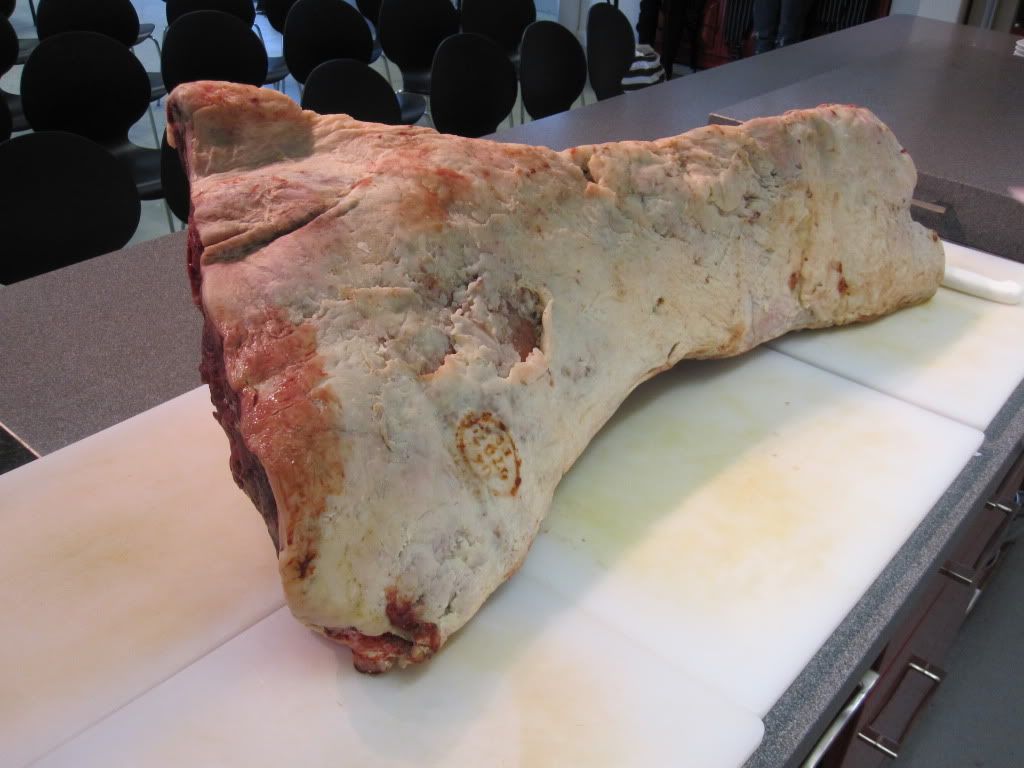
were greeted by the sight of a whole lamb and a quarter of a cow.
That's still a whole lot of cow. Of the two I was drawn to the beef
as it was an amazing looking thing, dark and firm looking with a
lovely goey ozziness coating the cut ends of the carcass... the kind
that would make 99% of the population recoil believing that the mere
sight may indeed kill them. Alas its only food spoilage bacteria and
constitutes a very very small risk to human health... besides to me
it looks like Mmmmmmmm!
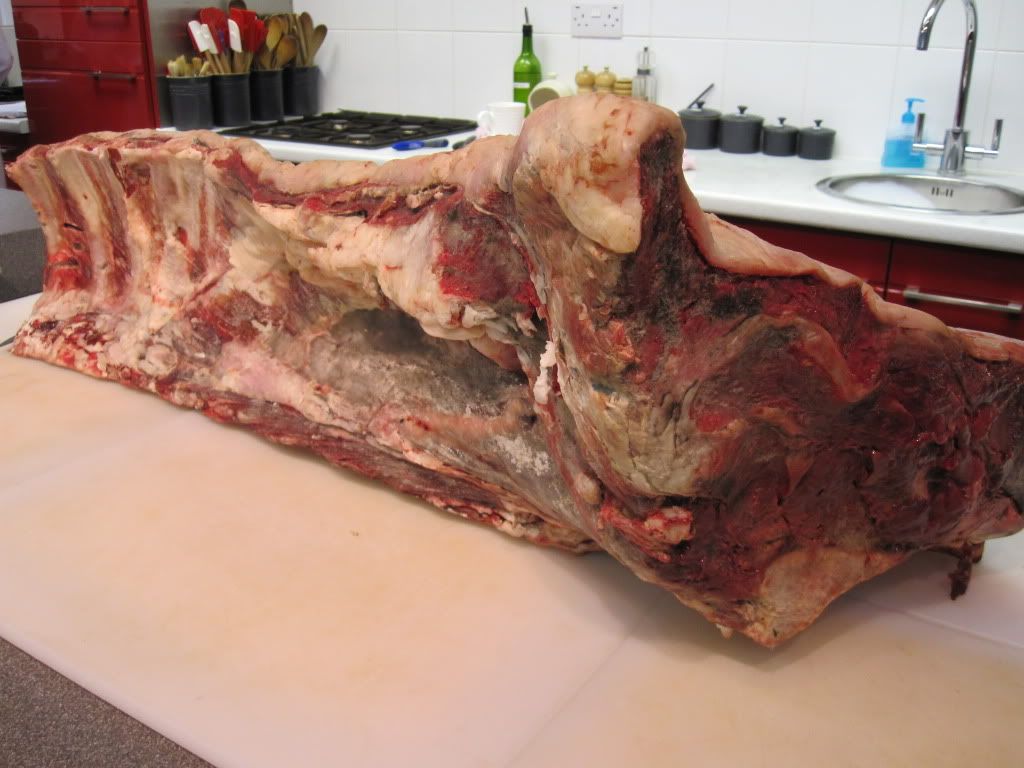
Would you eat it?
Our butcher, whos name unfortunately
evades me after all this time, excitedly talked to us about how this
was the best piece of beef that he had seen in years... was probably
of Angus breed due to its marbling and muscle size and had been aged
for 5-6 weeks judging by its appearance. Now when we go to the
supermarket we are all wooed by the claims of 14 day, 21 day or even
the heady heights of 28 day hung beef.... which is all good. Now I
am a meat eater, I dare say that I am in fact quite a good one. I
have eaten plenty of beef in my time, and even some 28day rib-eye
steaks upon occasion as well as fillets of Wagyu beef imported from
Japan while working on my first yacht.
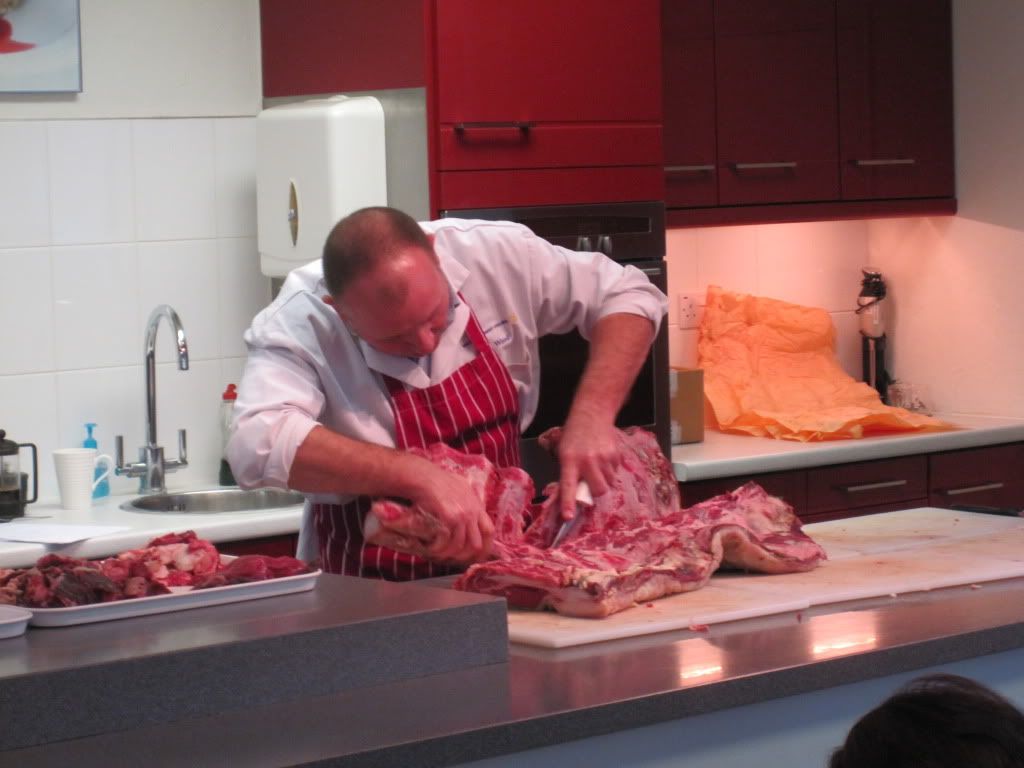
Easy when you know how!
This beef according to the butcher was
different to what any supermarket would sell, and not just because of
the previously mentioned 'goey ozziness'. His point was made after
about 20minutes of him expertly breaking down the carcass, a smell
wafted across the lecture room and tickled my nostrils. Was someone
cooking some steak for us to try in the adjoining kitchen? Had I
failed to notice a joint of beef go into the oven and is now roasting
away giving off that amazing succulent sweet roast beef aroma we all know and love?
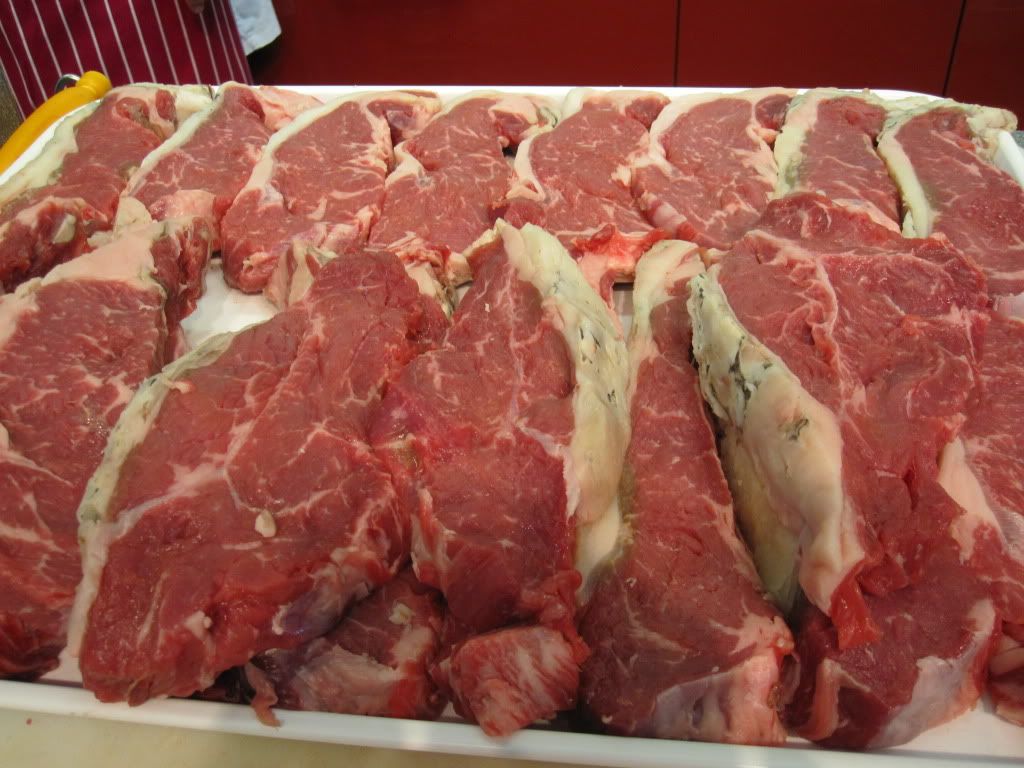
Lovely looking Sirloin steaks... Mmmmmm
No.
What I could smell was the beef on the
table. Raw beef. Beef that had been hung for around 5-6 weeks....
it was truly amazing. It smelt ready to eat...I would happily have
gnawed on some scraps if I would have been given half a chance when
the man with the big knives wasn't looking. It was a smell I truly
believe will stay with me for a long long time, the mere thought of
it is making me dribble on my keyboard right now!
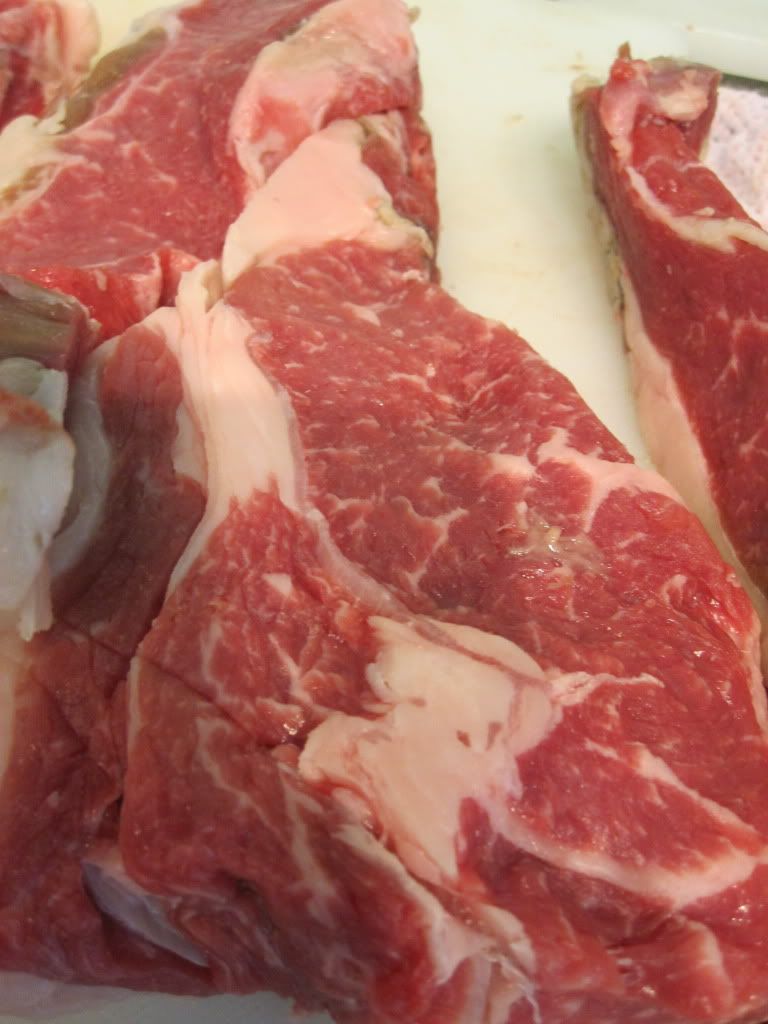
Fabulous Rib-eye Steaks... may fave steak... and look at that marbling of fat!!!!!!!
Despite the outside appearance of the
beef once taken apart into various joints it was bright red, just
like the stuff you buy in cellophane packets... at least it was a few
minutes after being exposed to the air. When first cut the meat was
very dark, it then changed to bright red as the myoglobin (I think it
was) reacts with the oxygen in the air.... and gives us meat the
average UK punter would happily now eat.
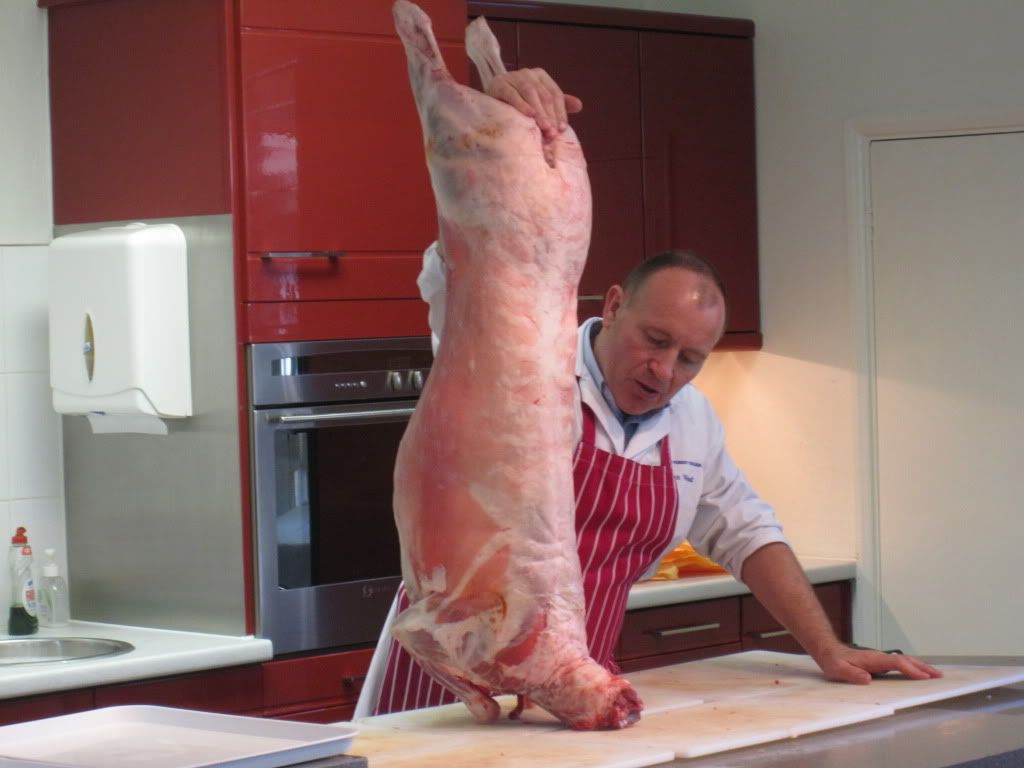
A lovely lamb... the butcher demonstrates a famous break dancing move, a favourite of lambs the country over.
Next came the Lamb, a lovely lamb in
the butchers account, though nothing to write home about in
comparison to the beef. He once again took the carcass apart with
such ease that would suggest a butchers job is an easy one. However
as with most thinks in life that look easy, look that way because of
the experience and expertise of the person whom you are watching.
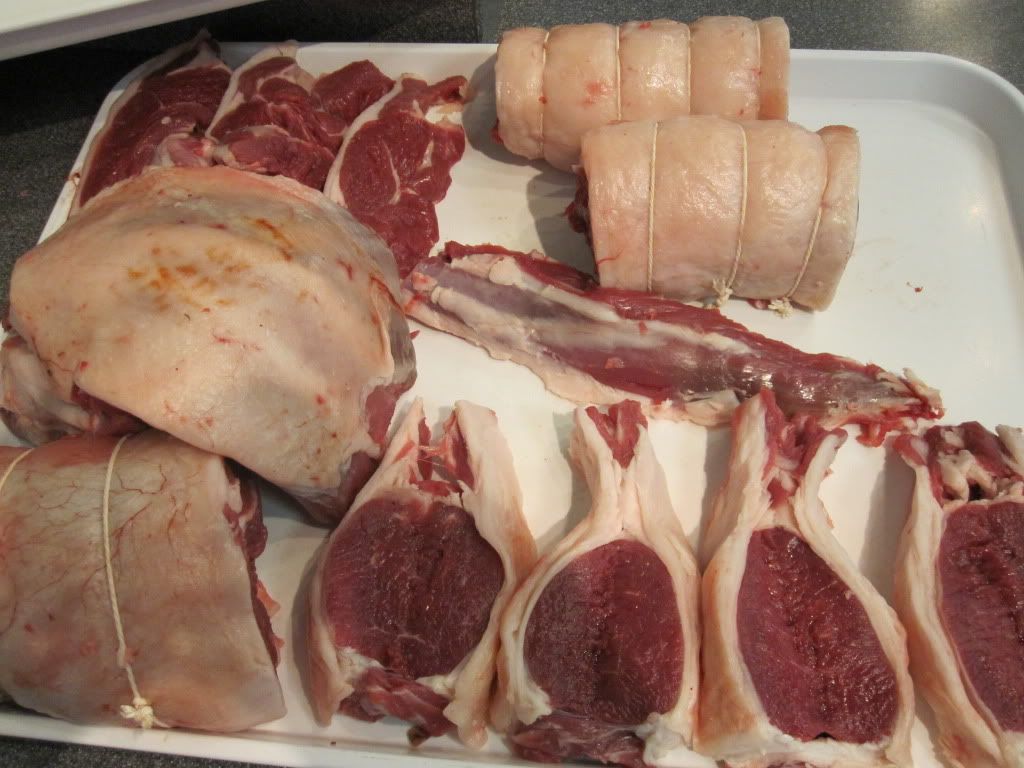
Various joints of lamb, with the Valentines Chops being in teh bottom right of the picture...if you squint really hard they may begin to look like a heart if you have drunk enough wine before hand!
We were shown a few new and a few old
cuts of meat... one of the old ones was quite apt as it was just a
few days before Valentines day so he showed us the “Valentine
Chop”. A more modern cut was the “cushion” which if memory
serves me correctly was made from a de-boned shoulder that was then
folded and stitched into a cushion like shape ready for roasting....
I have a feeling it would look better once cooked.
Of course we were given more
information about how to properly store meat, the effects of acidic
and alcoholic marinades, the slaughter process and other such things.
One of the most interesting for me was the info about something
called “cold shortening” which like most, had never heard of.
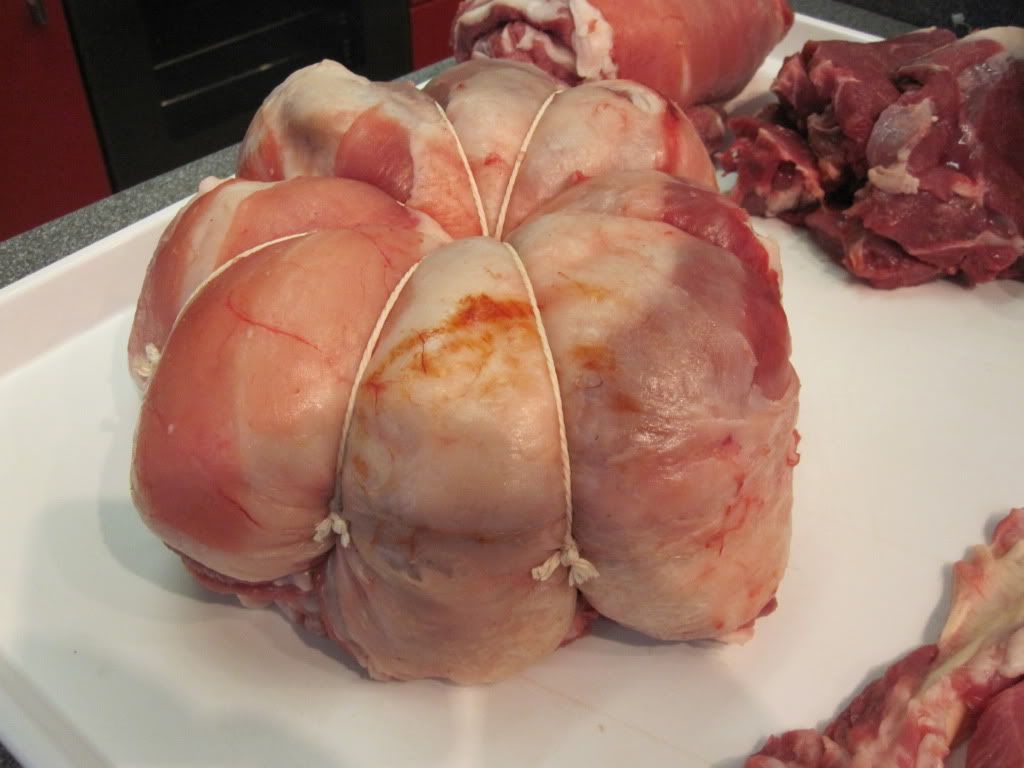
The lamb shoulder cushion thing... doesn't look all that comfortable to me.
Immediately after slaughter, many
changes take place in muscle tissue that convert the muscle to what
we would call meat. One of the changes is the contraction and
stiffening of muscle known as rigor mortis. Muscle is very tender at
the time of slaughter. However, as rigor mortis begins, muscle
becomes progressively less tender until rigor mortis is complete. In
the case of beef 6-12 hours are required for the completion of rigor
mortis, whereas in the case of pork, only 1-6 hours are required.
So... what's any of this got to do with
anything you maybe interested in? Well... if the carcass is chilled
before rigor mortis is complete you will have tough meat, and if its
then frozen you will have something called “thaw rigor” which is
incredibly tough meat.... upto 5x tougher than it should be. So if
you have ever cooked a piece of meat and had your teeth bounce off it
like you were chewing a rubber ball... chances are if you cooked it
well, you are witnessing the effects of cold shortening.
How can you tell if meat has this
problem... you cant... until you cook it! As you can guess this is a
bit of a problem and so large abattoirs now electrocute their
carcasses once slaughtered and butchered. The electrocution causes
the muscles to contract, this uses up the left over fuel supply in
the muscles (glycogen) to power the contraction of the muscles. Now
that the glycogen has been used, there is nothing left for the
muscles to use for rigor mortis meaning that problems with cold
shortening can be avoided... very useful in these massive abattoirs
that deal with huge amounts of animals on a daily basis. Also the
ageing process (the hanging can) be brought forward a couple of days
as some other processes are made redundant through this process.
Follow this link for something that makes sense if you didn't follow ;-)
All very interesting stuff if you are
into that sort of stuff, and explained to me why a lamb curry I made
for the crew last summer was just ridiculously chewy after being slow
cooked at 120c for 5 hours.... redemption is better late than
never!!!
Have you ever experienced cold
shortening? Or are you now going to use it as an excuse when you
cook something badly????
Dylan

